
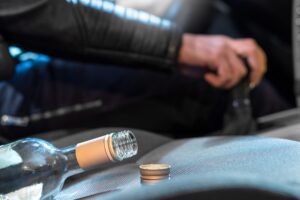
 In the United States, alcohol is responsible for thousands of preventable deaths and injuries every year. Despite the best efforts of policymakers and advocates to prevent accidents (efforts that have proved somewhat effective), drunk driving remains a problem of enormous scale.
A long recovery awaits individuals who sustain injuries in these accidents, and the challenges that they will face go beyond physical pain and suffering. Many victims also face medical debt, lost wages, and mental trauma.
In such dire circumstances, it’s difficult to know where to turn. Thankfully, Florida law provides injured individuals with an avenue toward relief. They may qualify to file a lawsuit against the at-fault party that seeks compensation for the hardships they’ve suffered.
While liability can also extend to the intoxicated individual, Florida’s dram shop law creates a cause of action against a third party—the party that served the alcohol.
The Text of the Law
Under Florida law, “a person who willfully and unlawfully sells or furnishes alcoholic beverages to a person who is not of lawful drinking age or who knowingly serves a person habitually addicted to the use of any or all alcoholic beverages may become liable for injury or damage caused by or resulting from the intoxication of such minor or person.”
The law allows victims to seek compensation against any bartender, liquor store owner, or another vendor that served the parties that caused the victims’ injuries. This may increase the value of a drunk driving accident case considerably, because it enables victims to pursue third parties that potentially have much more resources.
Drunk Driving Statistics
Alcohol is a contributing factor in thousands of car crashes, falls, and burns. In one recent year, nearly 10,000 people died in drunk driving car accidents, accounting for 31 percent of all driving deaths, according to the National Institute on Aging.
According to the National Highway Transportation Agency (NHTA), approximately one-third of all traffic crash fatalities in the United States involve drunk drivers (with BACs of .08 g/dL or higher). In one recent year, 10,511 people died in these preventable crashes. In fact, on average over a 10-year period, more than 10,000 people died every year in drunk-driving crashes.
In Florida specifically, an above-average number of drivers report getting behind the wheel after having too much to drink, which is why the state continues to struggle with drunk driving injuries and fatalities.
When Is a Third Party Liable?
The text of the law determines when an injured individual may hold a third party liable. Under Florida law, victims may qualify to pursue a lawsuit against two categories of people: (1) those who serve alcohol to a person not of legal drinking age and (2) those who serve alcohol to known alcoholics.
Let’s consider each category separately:
The Willful Sale of Alcohol to a Minor
The statute’s use of willfully is critical here, as it means that simple negligence alone is not enough to create liability.
For servers to face liability under the state’s dram shop law, they must know that the person is under the legal drinking age. The plaintiff can demonstrate that the defendant had this knowledge using either circumstantial or direct evidence.
For example, a teenager demands a drink at a bar. The teenager has a very youthful appearance, he’s wearing a high school letterman jacket, and there are other indicators on his person that indicate his young age. In this situation, the bartender may face liability if the teenager leaves the bar and causes an accident, because sufficient circumstantial evidence exists to establish that the server knows the teenager’s age.
However, if there were no obvious indicators of the teenager’s age, and the bartender simply failed to check the teenager’s I.D., this alone does not constitute sufficient circumstantial evidence.
Interestingly, the bartender does not have to serve the underage drinker directly to face liability under Florida law. For example, if the bartender knows that alcohol provided to an adult patron will eventually be consumed by an underage person, then this is sufficient to establish liability.
Habitually Addicted
You may think that you know what an individual who is habitually addicted to alcohol looks like. However, Florida’s dram shop law imposes a highly specific definition of habitually addicted.
The legal definition stems from a 1951 case, in which the Florida Supreme Court established that “someone whose habit of indulgence in strong drink is so fixed that he cannot resist getting drunk anytime the temptation is offered, with the inebriety frequent, excessive, and the dominant passion.” Todd v. Todd, 56 So. 2d 441, 442 (Fla. 1951).
Case law over the years has further fleshed out this definition. Courts have determined that a plaintiff may introduce circumstantial evidence to prove that the vendor knew the person being served was a habitual drunkard. For example, the plaintiff may introduce evidence that shows the vendor was familiar with the person’s drinking habits.
According to the court in Ellis v. NGN of Tampa, Inc., “serving an individual a substantial number of drinks on multiple occasions would be circumstantial evidence to be considered by the jury in determining whether the vendor knew that the person was a habitual drunkard.” 586 So.2d 1042, 1048 (Fla. 1991).
What Damages Are Available?
In a civil suit, when a court rules in a plaintiff’s favor, the court will order the defendant to pay what’s known as damages. Damages are a monetary sum intended to compensate plaintiffs for the injuries they’ve suffered because of the defendant’s negligence or wrongdoing. Damages are intended to make injured parties whole again by returning them to the condition that they occupied before the accident.
Generally, there are two kinds of damages available to a plaintiff in a dram shop legal case: (1) monetary damages and (2) non-monetary damages.
When a plaintiff seeks monetary damages, they are seeking compensation for injuries that are quantifiable in a specific dollar amount, such as medical bills and lost wages. Monetary damages are the easiest to prove and are demonstrated with financial documents, like pay stubs.
Non-monetary damages encompass claims that are difficult to assign a monetary amount, including abstract claims, such as pain and suffering, loss of consortium, and loss of future earnings.
Proving non-monetary damages is also more challenging because they do not cover monetary losses that can be easily demonstrated with a bill or note. For this reason, plaintiffs that bring non-monetary claims are often required to submit the testimony of an expert witness, such as a doctor or psychologist.
Who Cannot Be Sued?
Originally, Florida’s dram shop law was of much greater scope than it is today. In the mid-20th century, the state legislator narrowed the scope of the law to create liability for only two categories: (1) those that served alcohol to an underage drinker and (2) those that served alcohol to a habitual addict.
One of the most important exceptions to the dram shop law is the social host. The law only contemplates individuals and businesses that sell alcohol to the public and not those merely providing drinks at a private gathering. Of course, these private social hosts may still face liability under different laws and regulations.
Are Punitive Damages Available?
As already discussed, courts use damages to compensate victims for the injuries (financial, physical, and mental) that they’ve incurred because of the defendant’s wrongdoing. However, in unusual circumstances, the courts will utilize damages for another purpose—to punish the defendant. These are known as punitive damages.
Punitive damages are only used in extreme circumstances. Generally, the defendant’s conduct must be so repugnant that the judge feels compelled to send a message to the defendant and society that such behavior will not be tolerated going forward. Usually, a court must determine that the defendant’s actions were wanton and reckless or grossly negligent before awarding punitive damages.
Like many states, Florida imposes criteria for when courts may award punitive damages. According to Florida law, plaintiffs may only recover punitive damages if they can demonstrate that the defendant was personally guilty of intentional misconduct conduct or gross negligence.
According to the law, intentional misconduct “means that the defendant had actual knowledge of the wrongfulness of the conduct and the high probability that injury or damage to the claimant would result and, despite that knowledge, intentionally pursued that course of conduct, resulting in injury or damage.”
In the context of a dram shop lawsuit, third-party servers could face liability if they, for example, served a man who they knew was habitually addicted to alcohol, had a history of drunk driving violations, and was likely going to get behind the wheel after they served him.
Of course, the plaintiff would have to provide evidence proving the server knew the above facts, which may prove difficult.
According to the statute, gross negligence means that the defendant’s “conduct was so reckless or wanting in care that it constituted a conscious disregard or indifference to the life, safety, or rights of persons exposed to such conduct.”
For gross negligence, what the third party knew at the time that he or she served the alcohol is less relevant. The plaintiff only needs to demonstrate that the defendant’s decision to serve alcohol to the person in question constituted a “conscious disregard or indifference to the life, safety, or rights of persons exposed to such conduct.”
From the plaintiff’s perspective, an award of punitive damages usually means a significant payday. The court often grants the plaintiff compensation that goes well beyond what’s necessary to address the injuries and resulting costs.
Finally, Florida, like some other states, caps punitive damages. Under Florida law, punitive damages may not exceed the greater of three times the amount of compensatory damages awarded to each claimant or the sum of $500,000.
Sustaining injuries in a serious car accident can change victims’ lives forever. The things they once took for granted may now be out of reach. If they suffered serious bodily injuries, they may have a long road to recovery ahead of them, which may involve surgery, rehab, and physical therapy. What’s more, if insurance doesn’t cover this treatment, they may face significant medical debt. Additionally, if the injured individuals cannot work for an extended time, they may also lose their jobs.
The burden on victims and their families often proves overwhelming. The reality of the situation is even more excruciating if the accident was caused by drunk driving. It may be difficult to accept that the accident may have been prevented if the driver had simply decided to take a taxi instead of getting behind the wheel.
For many victims and their families, the path to healing both physically and emotionally begins with filing a drunk driving accident lawsuit against the driver. However, in many instances, the driver may not have significant financial resources.
Thankfully, Florida law offers victims of alcohol-related accidents other options. Under the state’s dram shop law, the injured may sue not only the person responsible for the accident but also the person or entity that served the alcohol, such as a bar or liquor store owner. This expansion of liability makes a lawsuit more viable, and the chances of a significant financial award more likely.
A successful lawsuit against a nightclub or bar may result in an award of compensatory damages, which will help the victim cover the costs of treatment and recovery. The first step toward relief is contacting a drunk driving accident attorney that has experience handling dram shop cases.
An attorney understands the nuances of the law and knows what evidence is needed to prove the case. Many drunk driving and dram shop lawsuits require extensive investigation and discovery. An attorney can manage this process efficiently and effectively.

An attorney is more than just a professional in a suit. Attorneys offer a sympathetic voice and candid, reliable advice in a time of great uncertainty. Thankfully, many lawyers offer a free initial consultation where the attorney can evaluate the client’s case at no out-of-pocket charge.
Victims shouldn’t hesitate to contact a lawyer, even if they don’t anticipate filing a lawsuit. Drunk driving accident lawsuits require extensive investigation, which could take weeks or even months. Waiting to file simply means that defendants have to wait longer for the aid that they may desperately need. Florida imposes a four-year statute of limitations on drunk driving accident cases. Failing to file by this deadline could permanently forfeit your right to legal recourse, so contact a drunk driving accident attorney today.
 855-WHAT-NEXT